KUFU
The Great Pyramid, read as a machine hypothesis
Rue’s idea is that the pyramid’s chambers, passages, shafts, and stone barriers may work together as a process system. This field atlas walks through that model, the physics behind it, the evidence it needs, and the parts that remain conjecture. Open the cross-section, switch between readings, select a stage, and follow the calculations with their assumptions.
The structure in view
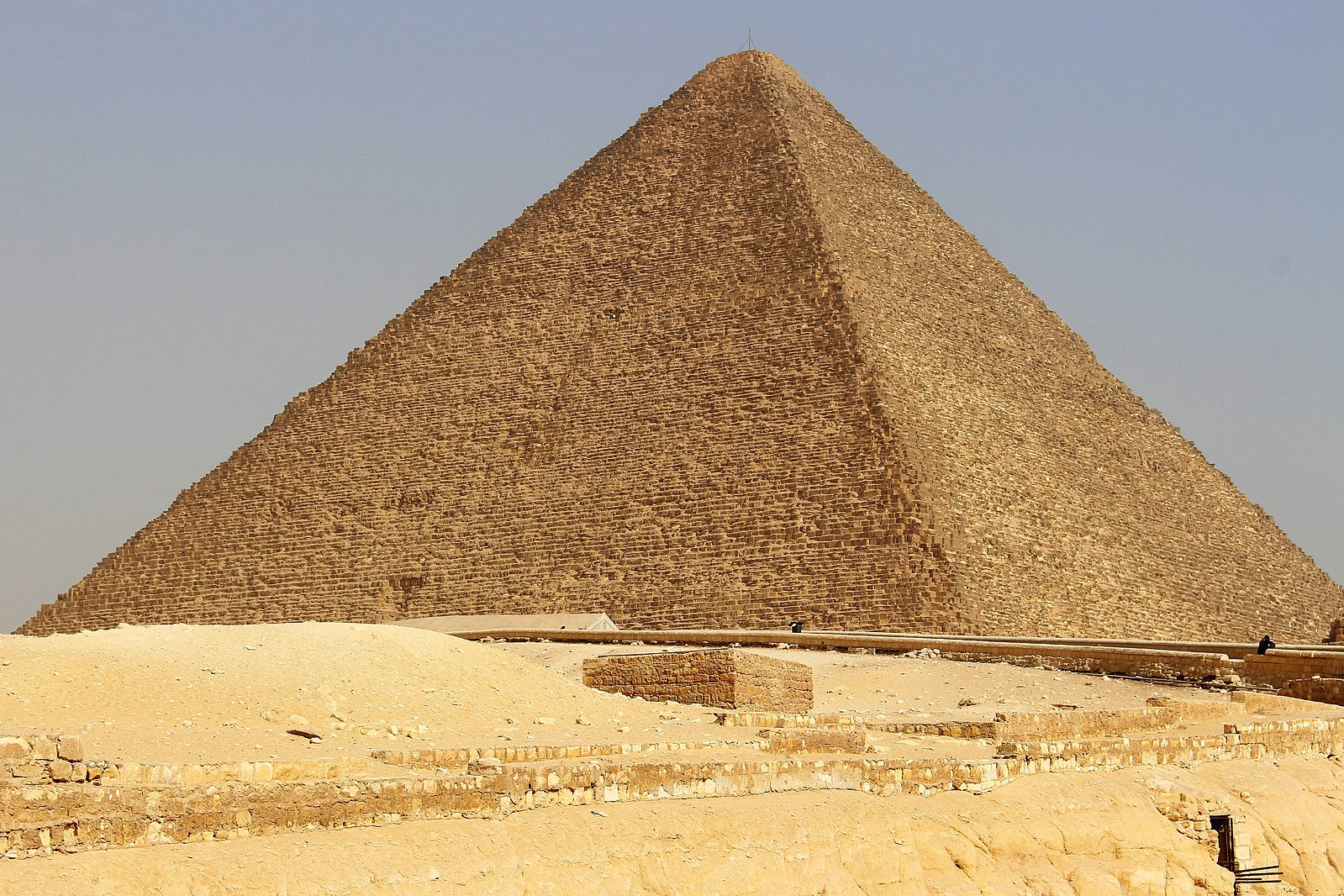
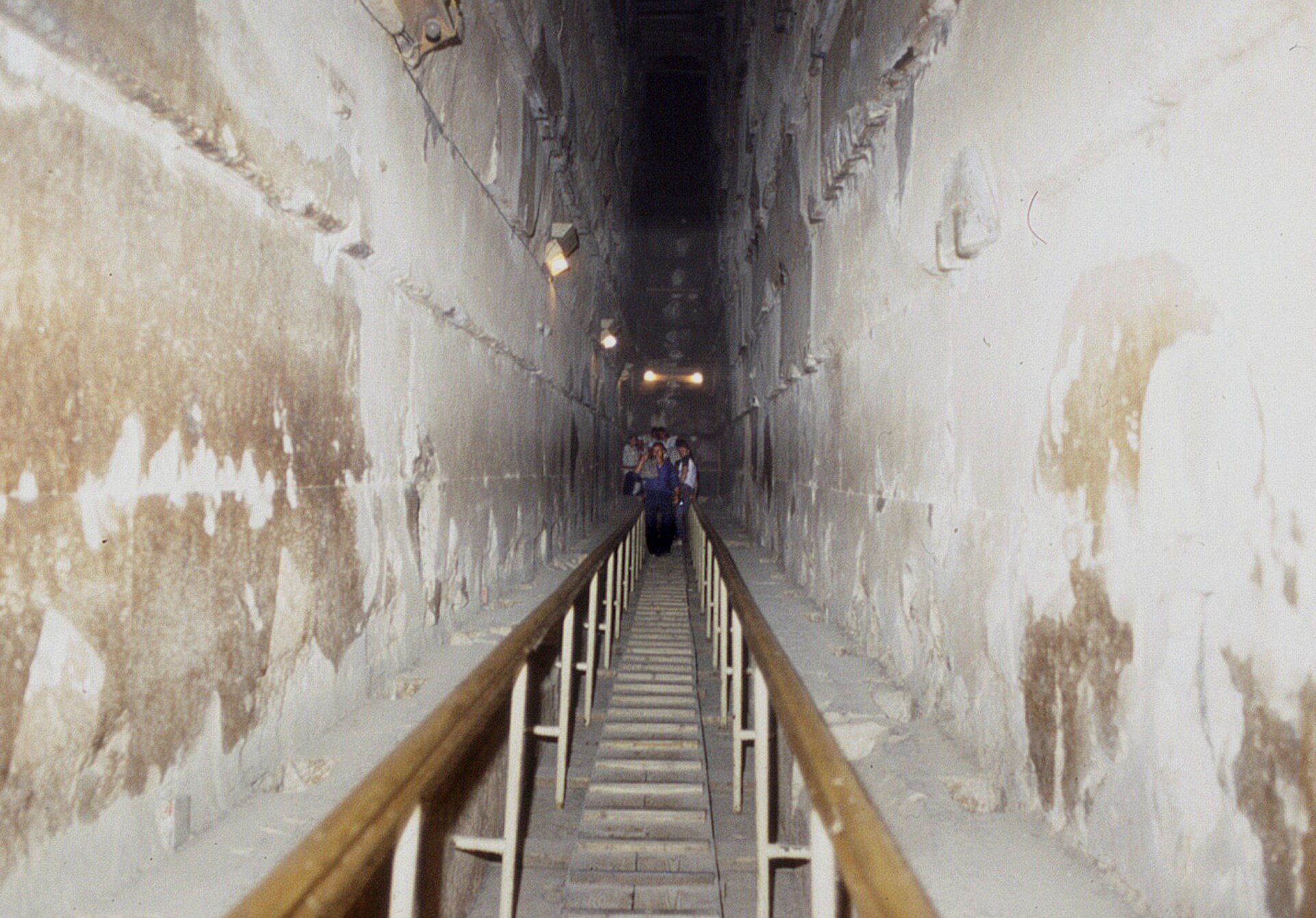
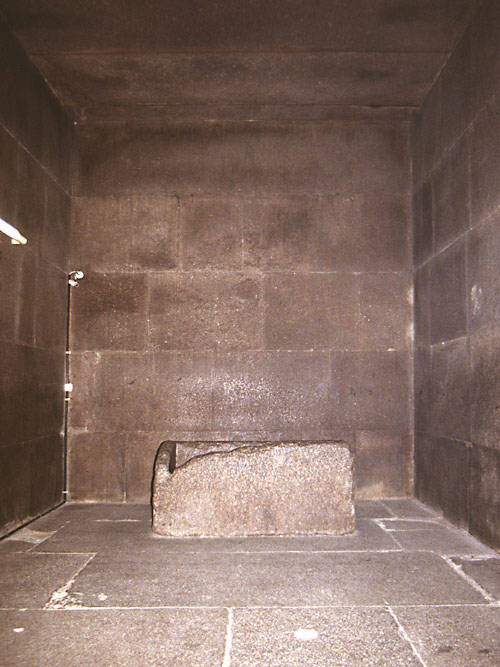
These photographs and the section drawing anchor the discussion to the pyramid’s visible fabric and documented layout. The drawing is architectural context; proposed machine functions remain interpretations.



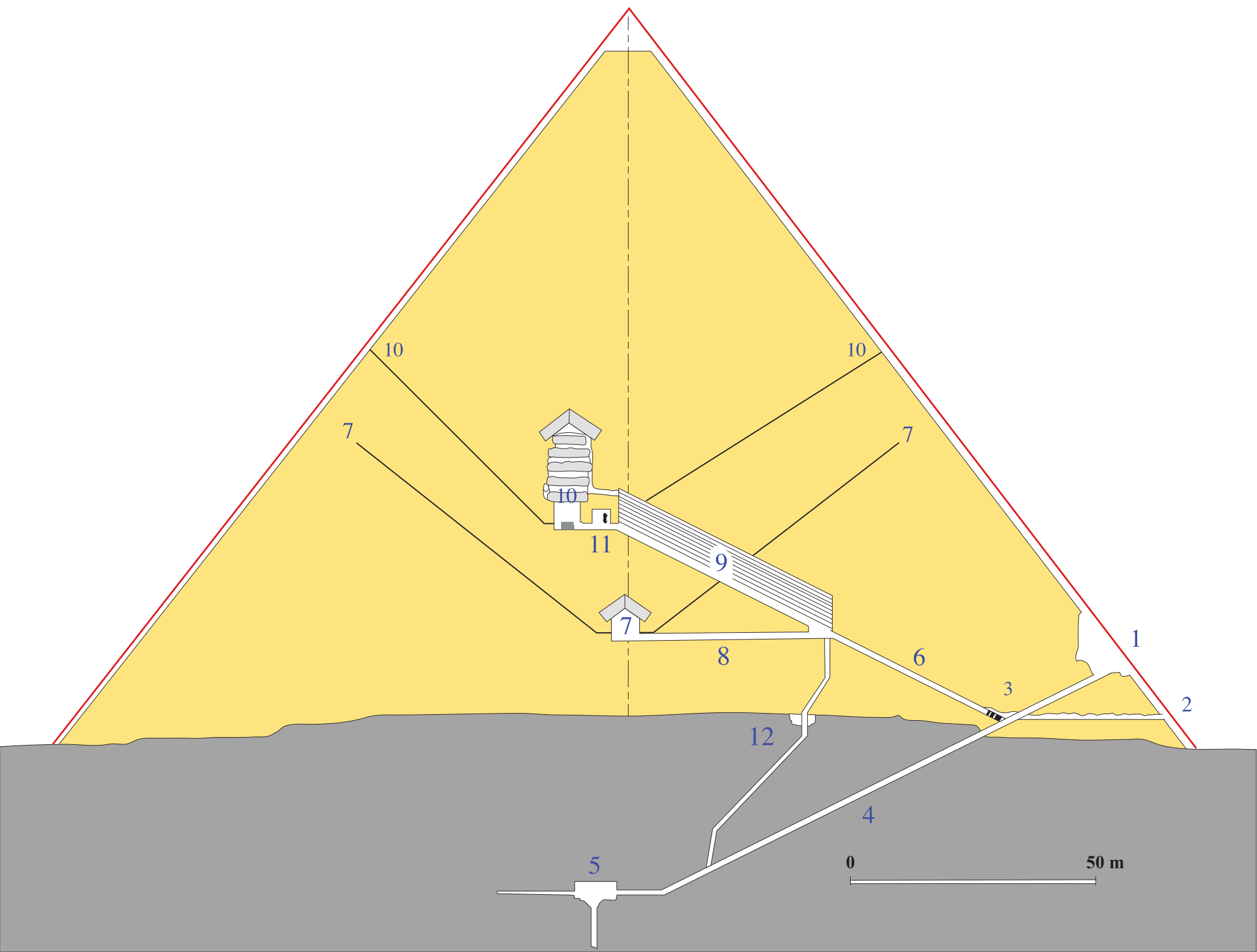

01What Rue is proposing
Read the real pyramid as a sequence of possible machine stages: intake, mixing, excitation or resonance, compression, collection, and emission. In this model, each chamber or passage has a proposed job.
The interactive cross-section lets you switch between the standard architectural reading and Rue’s mechanical reading, then step through the proposed operation.
02Blueprint and measurements
The model follows the pyramid’s actual layout using published surveys, dimensions, scans, and archaeological descriptions. The building itself is the blueprint being read. This page does not claim to possess a surviving Egyptian master drawing. UCL notes that surviving ancient Egyptian architectural plans appear to record existing features rather than serve as construction drawings.
Measured dimensions, uncertain measurements, and disagreements stay visible in the data tables. The interactive drawing is approximate and is labeled where features are hypothetical or not to scale.
03What Tesla adds—and what he does not
Tesla provides a comparison for high-frequency circuits, resonance, grounded conductors, and his proposed wireless transmission systems. Those are documented parts of his work.
The comparison is not proof that the pyramid was electrical, and no direct historical link between Tesla and Khufu’s pyramid has been established. Tesla’s patents document proposed designs; Wardenclyffe never became a fully operating global wireless power network.
Tesla, US 645,576Tesla, US 787,412U.S. National Park Service: WardenclyffeTesla Science Center: wireless power
04What would count as proof?
A persuasive machine explanation needs more than a shape match. It needs a testable input and output, a complete energy balance, materials or construction evidence that fits the mechanism, and results that independent researchers can reproduce.
The calculations here test consequences of chosen assumptions. They do not establish that ancient builders intended those mechanisms. The reality-check section lists what is present, missing, disputed, or still unknown.
05Calculation assumptions
The piezoelectric calculation now exposes assumed microseismic rate (0.2 Hz by default) and strain amplitude (1 nε by default), independent of the static-load slider. Its grain-cancellation output is a heuristic scenario, not a measured pyramid output. Published lab work on a granite sample found an effective coefficient about three orders below single-crystal quartz; the pyramid’s own stone response has not been measured.
The ideal cavity estimate now uses the King’s Chamber length and height, giving about 29.5 MHz for those dimensions. It still assumes perfectly conducting walls, so it is a reference frequency, not a measured resonance in the stone structure. Ambient radio field, temperature difference, and air-stack values remain adjustable assumptions.